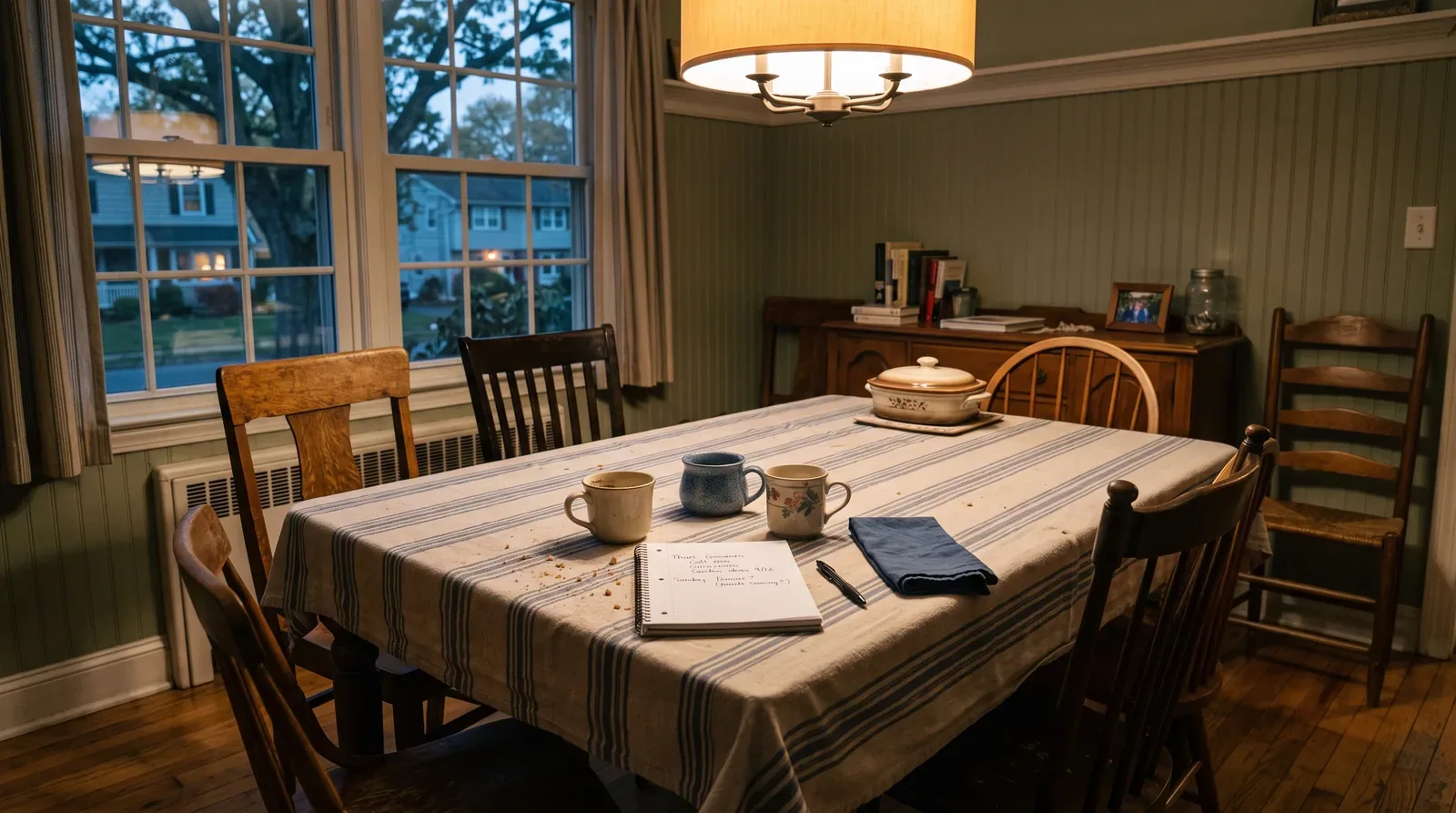
The phone calls sound fine all year. Then you walk in the door for Thanksgiving and something is off, and you cannot immediately name what. Families in Monmouth and Ocean County call us more in the two weeks after Thanksgiving than in any other stretch of the year, and one dramatic event is rarely what prompts it. What prompts it is a pile of small things, all noticed in the same afternoon.
Open the Refrigerator First
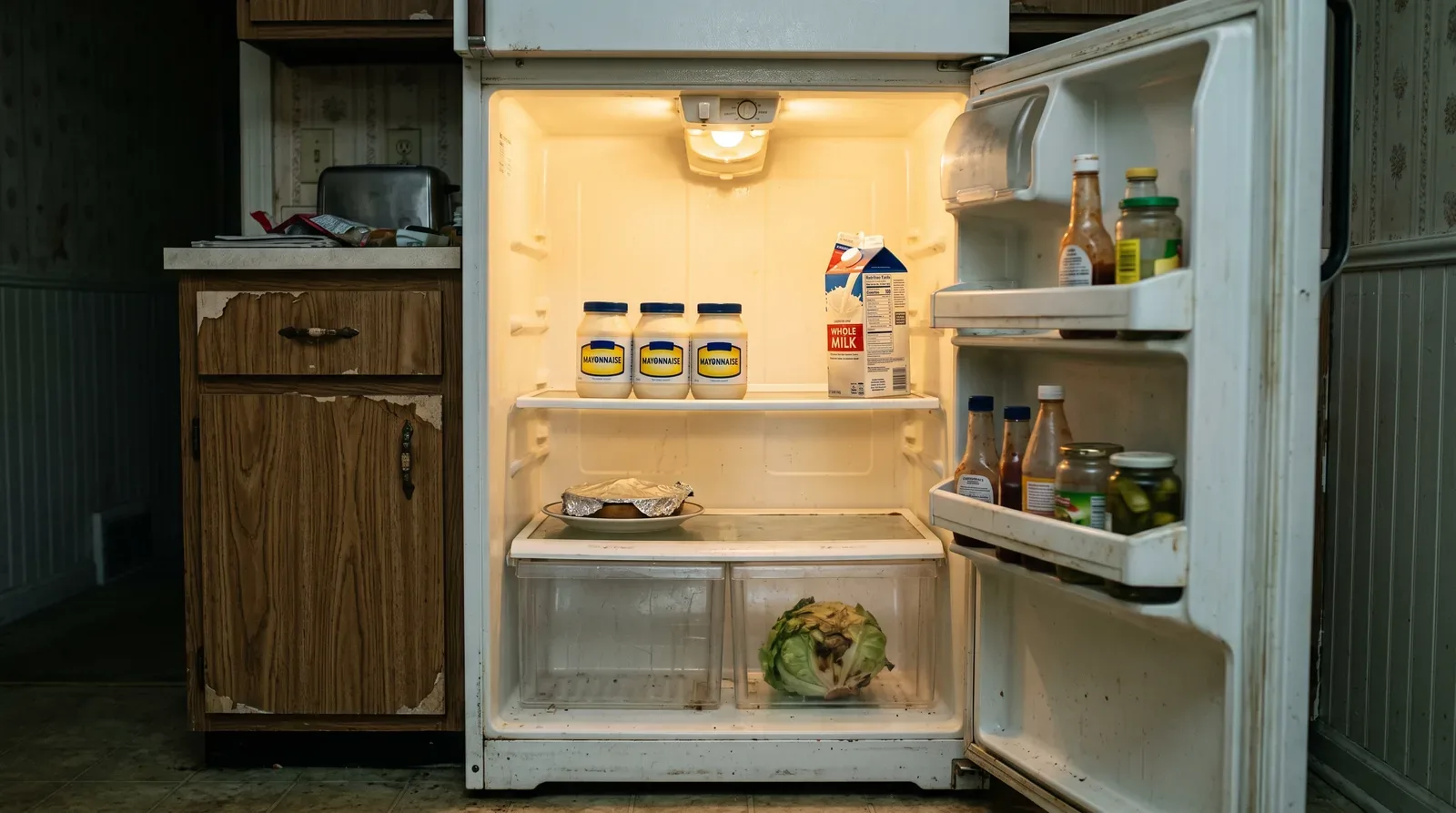
Before the coats are off. The refrigerator tells you more in ten seconds than an hour of conversation will.
You are looking for expired dairy and produce that has gone soft, freezer meals stacked up untouched, or the opposite problem, a refrigerator with almost nothing in it. Duplicate purchases matter too. Four unopened jars of mayonnaise usually means someone is shopping without a list because they cannot remember what they have.
Then check the stove and the pots. Scorched pans, a burner that has been left on, or a microwave doing all the work when the oven used to are all worth noting. Weight loss is the confirming signal. If your father's shirts hang differently than they did in July, the kitchen is where the explanation usually is.
The Mail Pile and the Bills
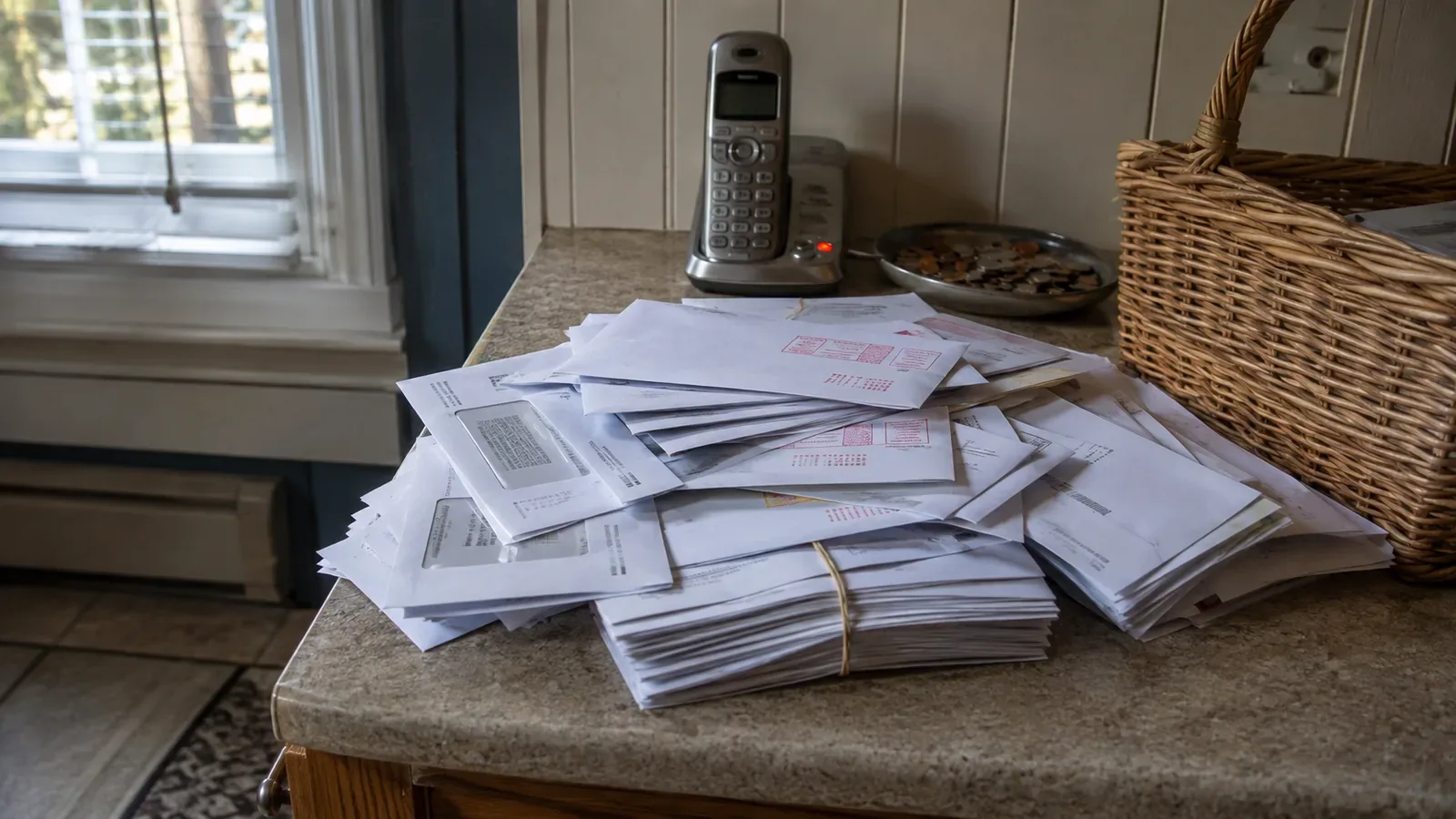
Look at the counter where the mail lands. Unopened envelopes from utilities and insurers, second notices, or a stack of solicitations that have clearly been answered are all signals that the paperwork side of life has gotten away from someone.
Check for repeated charitable contributions to organizations nobody recognizes, and for the newer version of the same problem, subscriptions and services signed up for over the phone. Financial confusion often shows up months before anyone notices memory changes in conversation, because a person can hold a normal conversation long after they have stopped being able to track a due date.
Watch How They Move Through the House
Do this quietly, over the whole visit, not as an inspection.
- Do they reach for furniture crossing a room, or run a hand along the wall in the hallway
- How do they get out of the soft armchair, and how many attempts does it take
- Are they using the stairs, or has something moved downstairs that used to live upstairs
- Is anyone sleeping in a recliner instead of a bed
- Are there bruises, especially on forearms and hips, that come with a vague explanation
Ask directly whether they have fallen. Ask it once, plainly, and then let the silence sit. More than half of older adults who fall never tell anyone, including their doctor, because they know exactly what conversation it will start.
Listen for What Is Missing
Cognitive change over a holiday visit is easy to misread in both directions. One repeated story means nothing. A pattern is different.
Listen for the same question asked three times in an afternoon, for a lost thread mid-sentence, for a name replaced by a description. Notice whether the person has stopped doing something they always did, hosting, driving to church, playing cards on Wednesdays, and listen to how they explain giving it up. "I just got tired of it" is sometimes true and sometimes cover.
Hygiene tells you something too, and it is the hardest one to look at with a parent. Clothes worn several days running, hair or nails that are not being kept up, or a bathroom that suggests showering has become infrequent all point to the same place: the daily routine has gotten too hard to sustain alone.
Do Not Skip the Car
Walk around it in the driveway before you leave. Fresh scrapes on the bumpers and mirrors, or paint transfer along one side, are the clearest evidence you will get, and drivers rarely volunteer it. Ask when they last drove at night. Since daylight saving ended on November 1, dusk in New Jersey now falls before dinner, and a five o'clock appointment means a dark drive home.
Losing the car keys is the single hardest conversation in this whole list, and it is not the one to force during a holiday dinner. What you can do in November is establish that appointments and errands have another way to happen. That is exactly what transportation and errand support is for, and it is a far easier sell than surrender.
What to Do With What You Saw
The mistake families make is going home, worrying for three weeks, and then arriving in January with a plan the parent had no part in making. That approach fails almost every time.
Try this instead.
Compare notes with your siblings while the visit is fresh, and write down what each of you actually observed rather than what you concluded. Observations hold up in a conversation. Conclusions start arguments.
Pick one change, not five. The instinct is a total solution. What works is naming the single hardest part of the day and solving only that. Usually it is mornings, bathing and dressing, or evenings around dinner.
Frame the help around the task rather than around the person. "Someone to help with showers on Monday, Wednesday, and Friday so you are not doing that alone" is a proposal. "You need care now" is a verdict, and it will be refused.
Expect to be turned down the first time, and do not treat that as final. Most families we work with had this conversation two or three times before anything changed. Resistance early on is normal, and it usually softens once a specific, limited offer is on the table instead of an open-ended one.