By early December in Monmouth County, the sun is gone before four thirty. For a family caring for someone with dementia, that hour is not a scheduling detail. It is when the day changes character, and December is the month it changes hardest.
What Sundowning Actually Is
The Alzheimer's Association describes sundowning as increased confusion that people living with Alzheimer's and dementia experience from dusk through the night. In practice families describe it as a person who was settled at two in the afternoon becoming anxious, agitated, or restless by five, sometimes pacing, sometimes insisting on going home while already sitting in their own living room.
It is not deliberate and it is not a sign that you are doing something wrong. The exact cause is not fully understood, though it appears tied to the disruption of the internal body clock that dementia causes.
The Alzheimer's Association points to several contributing factors: mental and physical exhaustion built up over the day, low lighting that creates confusing shadows, disrupted sleep cycles that leave a person tired during the day and awake at night, unfamiliar surroundings, and sensing stress or frustration in a caregiver.
Why December Makes It Worse
Three things stack up at once in New Jersey this month.
The daylight goes first. After the clocks changed on November 1, dusk moved into the middle of the afternoon, and by the solstice it arrives around four thirty. If the trigger is partly the transition from light to dark, that transition now lands in the middle of the active part of the day rather than at the end of it.
Daylight exposure drops as well. Cold, wet weather keeps people inside, and the outdoor light that helps anchor a body clock stops arriving. Someone who spent twenty minutes on the porch every afternoon in September may not have been outside in weeks.
Then the routine breaks. December brings decorations, visitors, rearranged furniture, meals at different hours, and a television that stays on later than usual. Each one is a small disruption on its own, and disruption is what dementia handles worst.
Light Is the First Thing to Change
This is the cheapest thing on the list and the one families tell us makes the fastest difference.
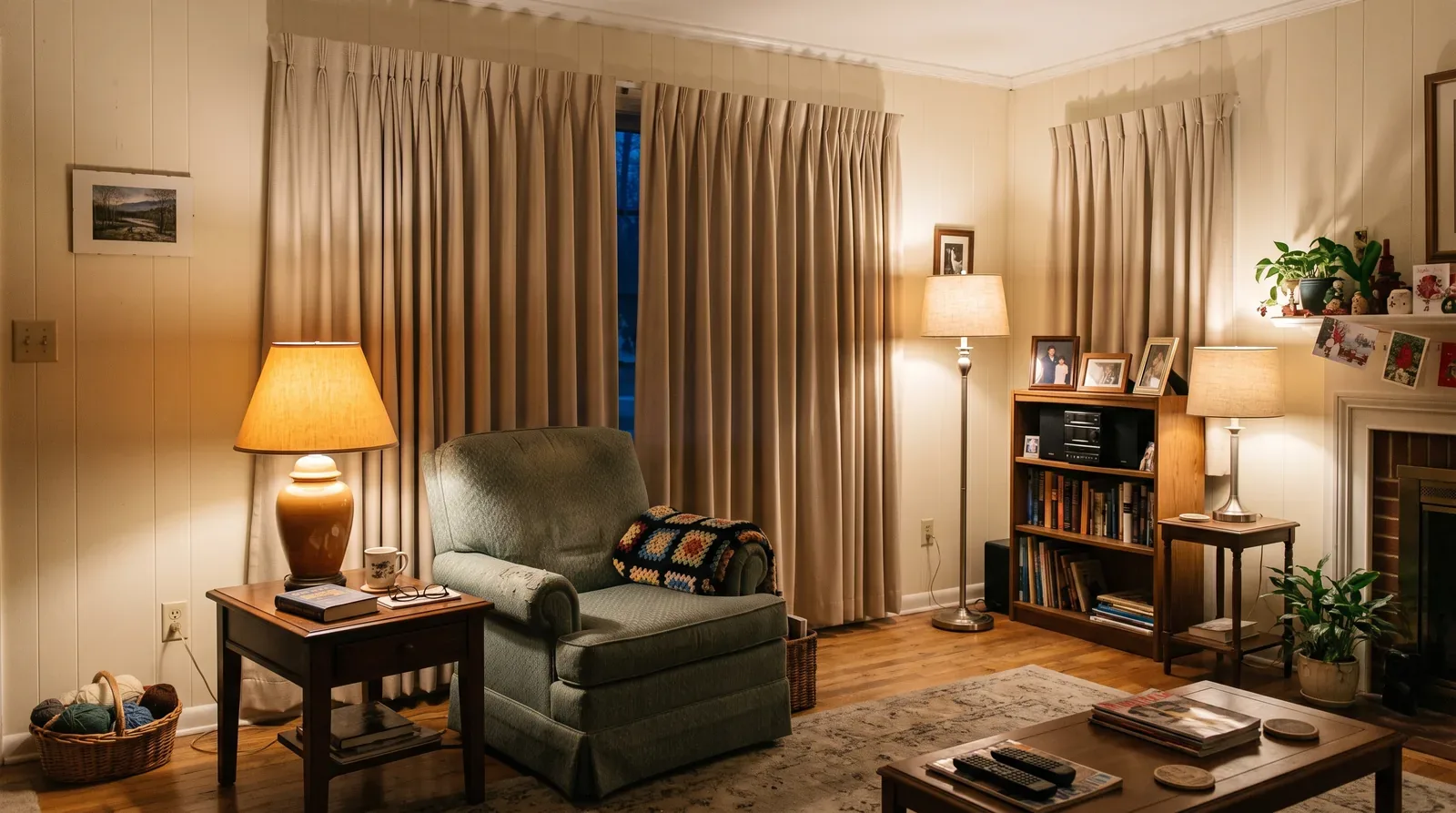
- Turn the lamps on before dusk rather than after. Set them on timers for three thirty so the house never makes the transition from bright to dim
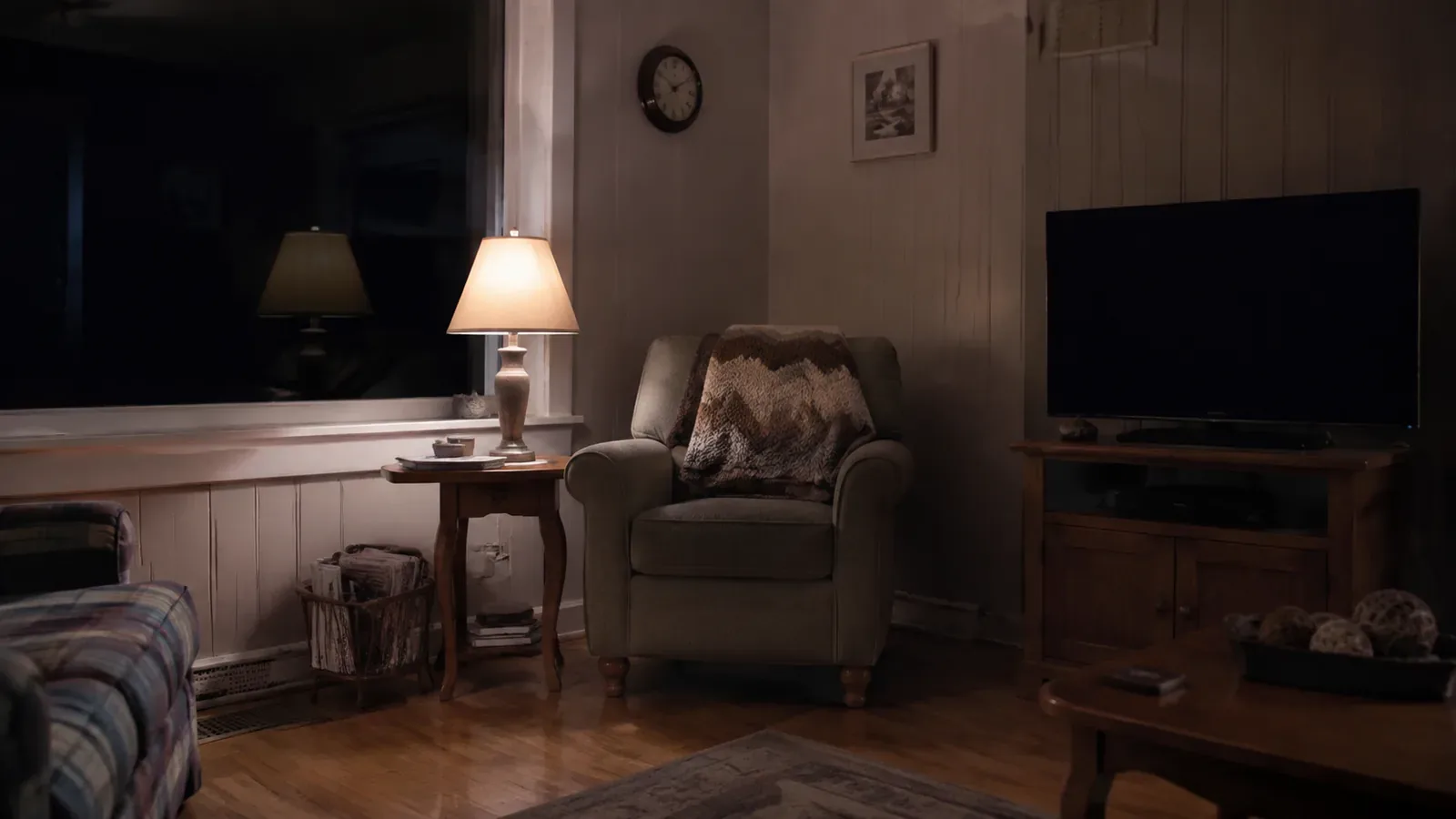
- Add light in the corners. Overhead fixtures leave shadows in exactly the places that cause misperception, so table and floor lamps matter more than the ceiling
- Close the curtains before dark rather than after. A window that turns into a black mirror with a reflection in it is a common trigger
- Keep a lit path from the bed to the bathroom overnight with motion-sensor night lights
- Get daylight in early. Twenty minutes near a bright window in the morning, or outside when the weather cooperates, helps hold the sleep cycle in place
Protect the Afternoon
The pattern most families land on is simple: put the demanding parts of the day early and defend the late afternoon.
Schedule appointments, baths, and visitors for mornings. A person who has been to the doctor, seen three relatives, and skipped a nap arrives at four o'clock already spent, and exhaustion is one of the listed contributors to sundowning.
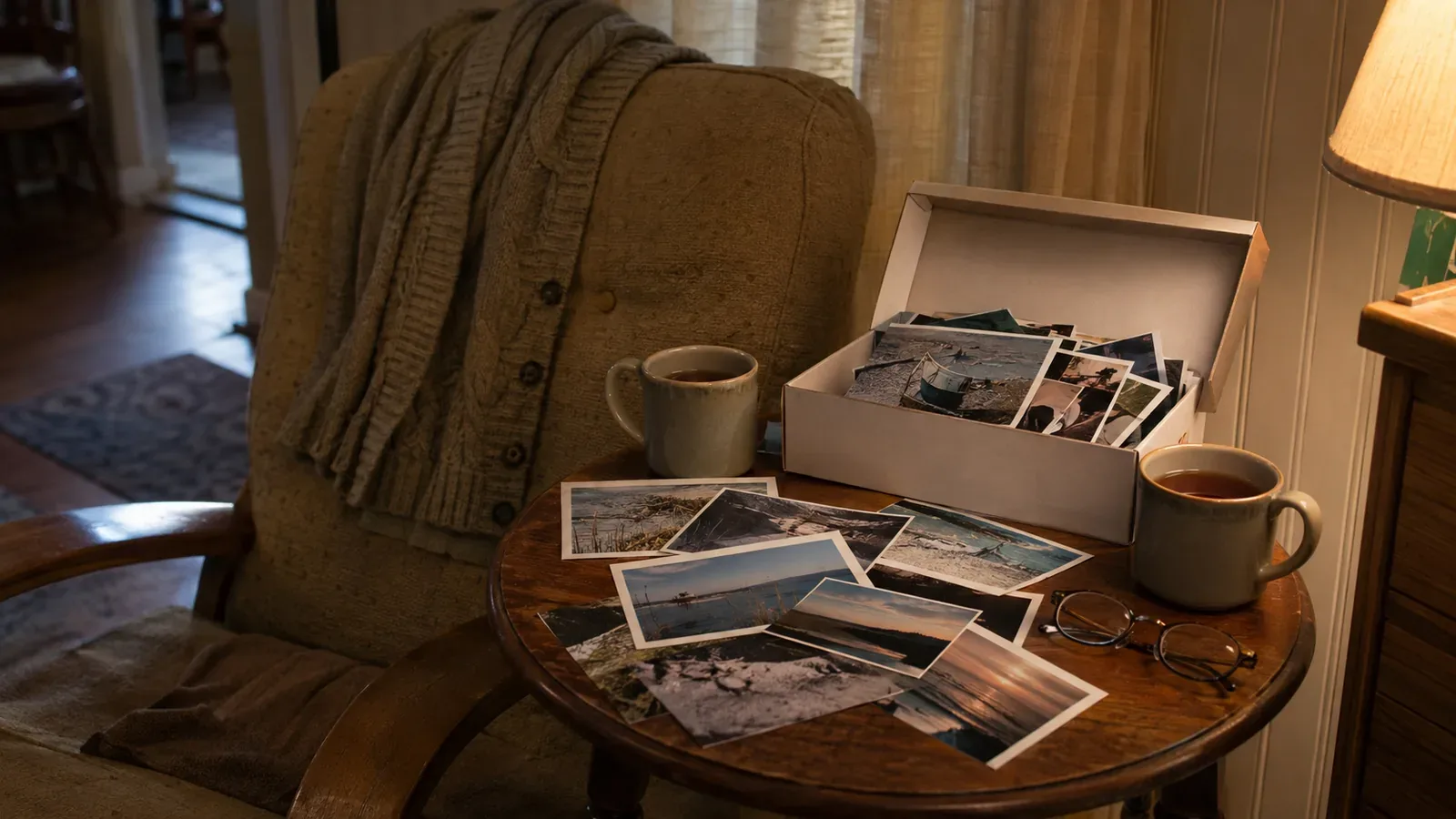
Keep the late afternoon quiet and predictable. Fewer people, lower volume, the same activity in the same chair at the same time. Familiar music, folding laundry, looking at old photographs, anything that occupies without demanding.
Watch the caffeine and alcohol, both of which the Alzheimer's Association flags as affecting sleep. The afternoon coffee that was harmless five years ago may be part of the problem now.
Serve the larger meal at midday and keep the evening meal lighter, which is one of the routines our meal preparation support is built around. It reduces how much has to happen in the hardest hours.
And keep an eye on your own tone. When a person can no longer follow the words, they still read the pitch of your voice and the speed of your movements. A stressed caregiver in the kitchen at five o'clock makes the room harder to be in, which is a lot to ask of someone who is already tired.
What the Holidays Do to a Routine
The gathering that everyone is looking forward to is often the hardest afternoon of the month for the person at the center of it.
If you host, hold the gathering earlier in the day, keep it smaller than tradition demands, and set up a quiet room the person can retire to without it being a scene. Brief the relatives who only visit once a year, and be specific about it. Ask them not to quiz anyone on names, not to correct a wrong date, and to skip "you remember me, don't you." Following the person's lead in conversation works far better.
Leave the furniture where it is. A rearranged living room is disorienting for weeks, not hours. If decorations are important, put up fewer of them, skip anything that flashes, and avoid moving the chair someone always sits in.
When the Caregiver Is the One Running Out
Late afternoons are also when family caregivers break, and December compounds it. You are managing sundowning at four thirty, cooking, and fielding calls about who is coming Christmas Eve.
Consistent afternoon coverage is one of the more effective uses of home care hours we see. A familiar aide arriving at three, before the difficult stretch rather than during it, holds the routine in place and gives you the hours back. Our companionship and dementia support aides are trained in redirection and routine reinforcement, and consistency of caregiver matters more in dementia care than in almost any other situation, so we prioritize stable staffing.
There is also state help worth knowing about. New Jersey's Statewide Respite Care Program pays toward short-term relief for family caregivers, with 2026 limits of $2,982 in monthly income and $40,000 in liquid assets for a single care recipient, or $5,964 and $60,000 for a married couple, and family costs on a sliding scale from zero to 25 percent. Your county's Aging and Disability Resource Connection can screen you at 1-877-222-3737.